
5 Ways to Improve Cash Flow Without Borrowing
Cash flow is one of the most important indicators of business health.
Even profitable businesses can fail if cash is not managed effectively.
The good news is that improving cash flow does not always require borrowing.
There are practical, internal strategies that can significantly improve liquidity without taking on additional debt.
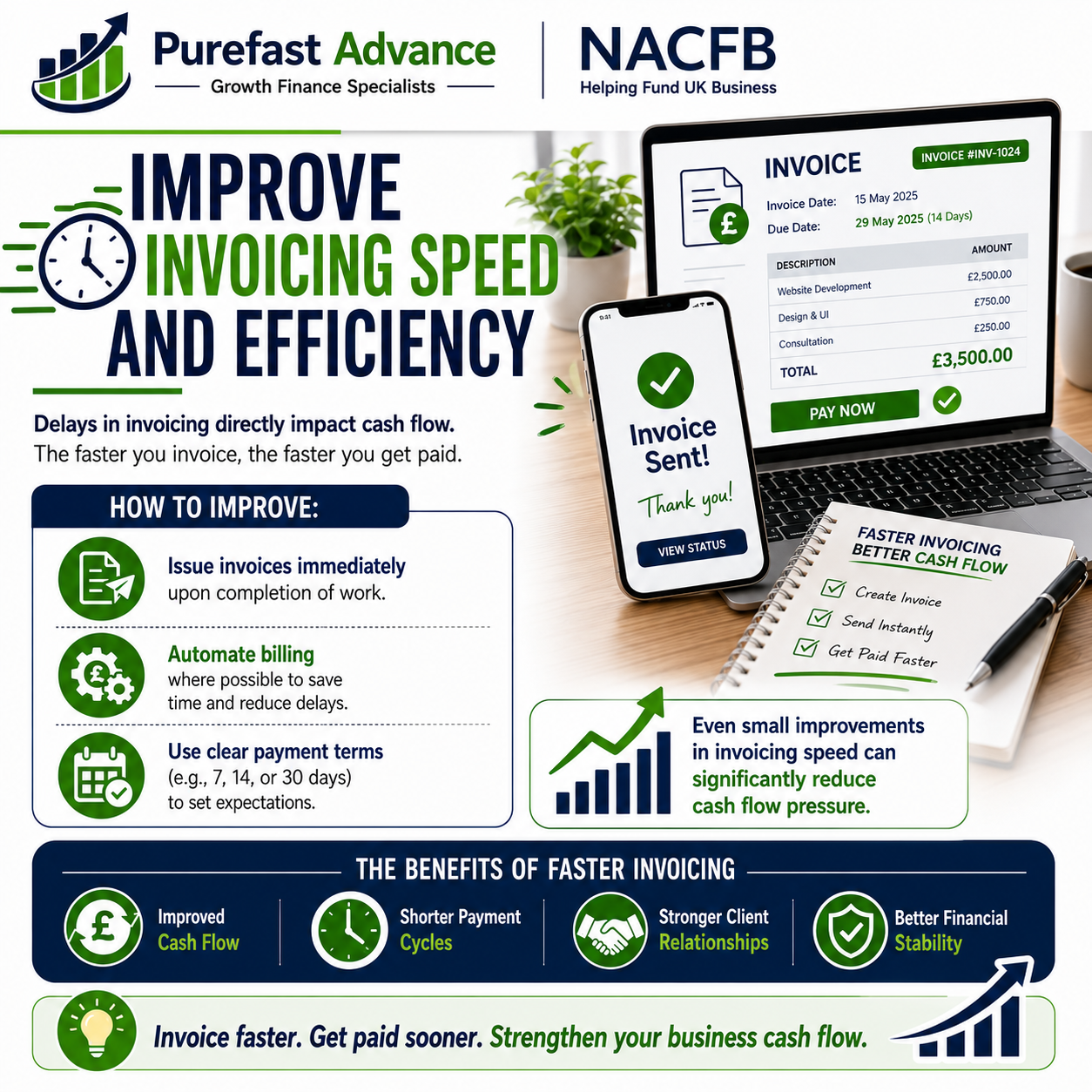
1. Improve Invoicing Speed and Efficiency
Delays in invoicing directly impact cash flow.
The longer you wait to issue invoices, the longer it takes to receive payment.
To improve this:
Issue invoices immediately upon completion of work
Automate billing where possible
Use clear payment terms (e.g., 7, 14, or 30 days)
Even small improvements in invoicing speed can significantly reduce cash flow pressure.
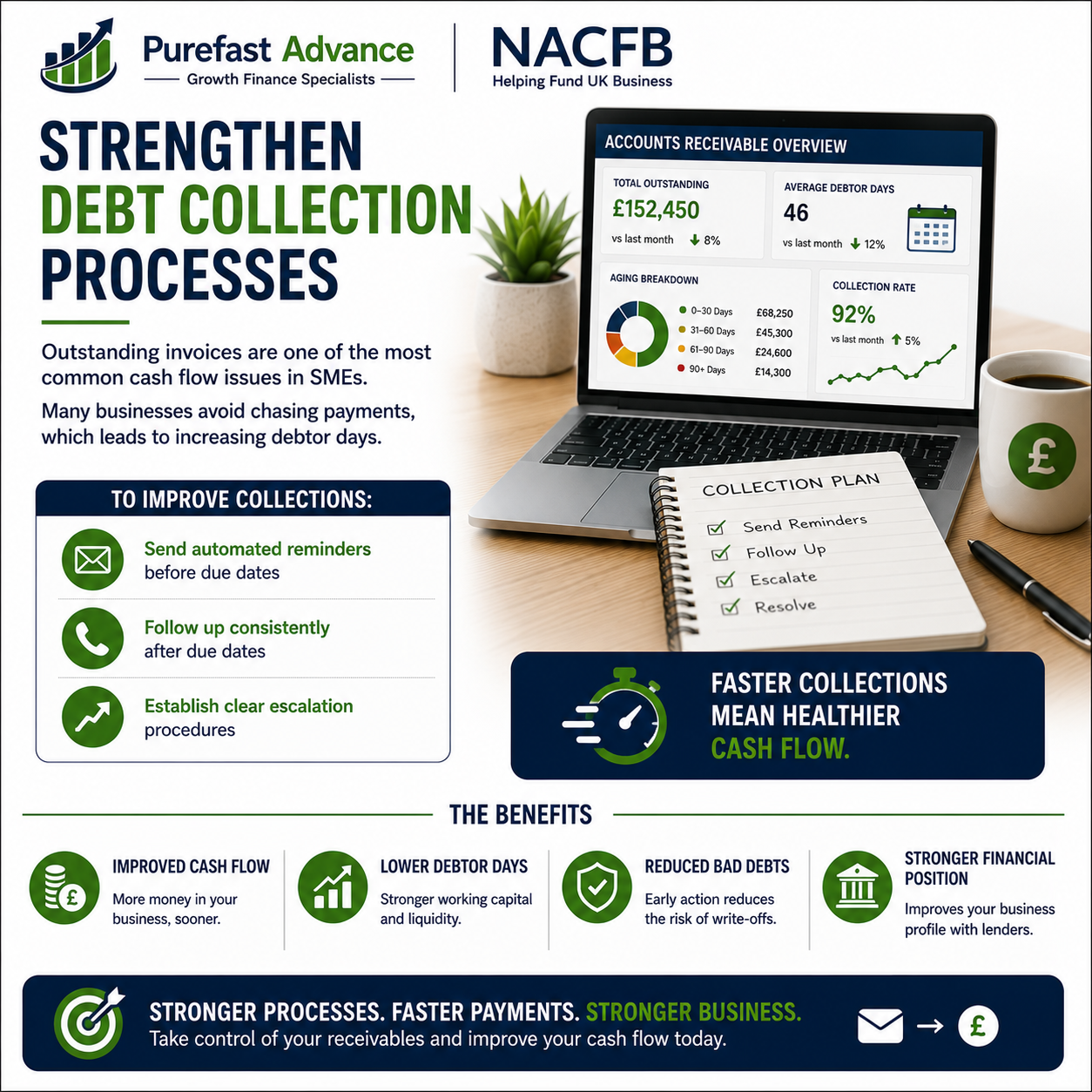
2. Strengthen Debt Collection Processes
Outstanding invoices are one of the most common cash flow issues in SMEs.
Many businesses avoid chasing payments, which leads to increasing debtor days.
To improve collections:
Send automated reminders before due dates
Follow up consistently after due dates
Establish clear escalation procedures
Faster collections mean healthier cash flow.
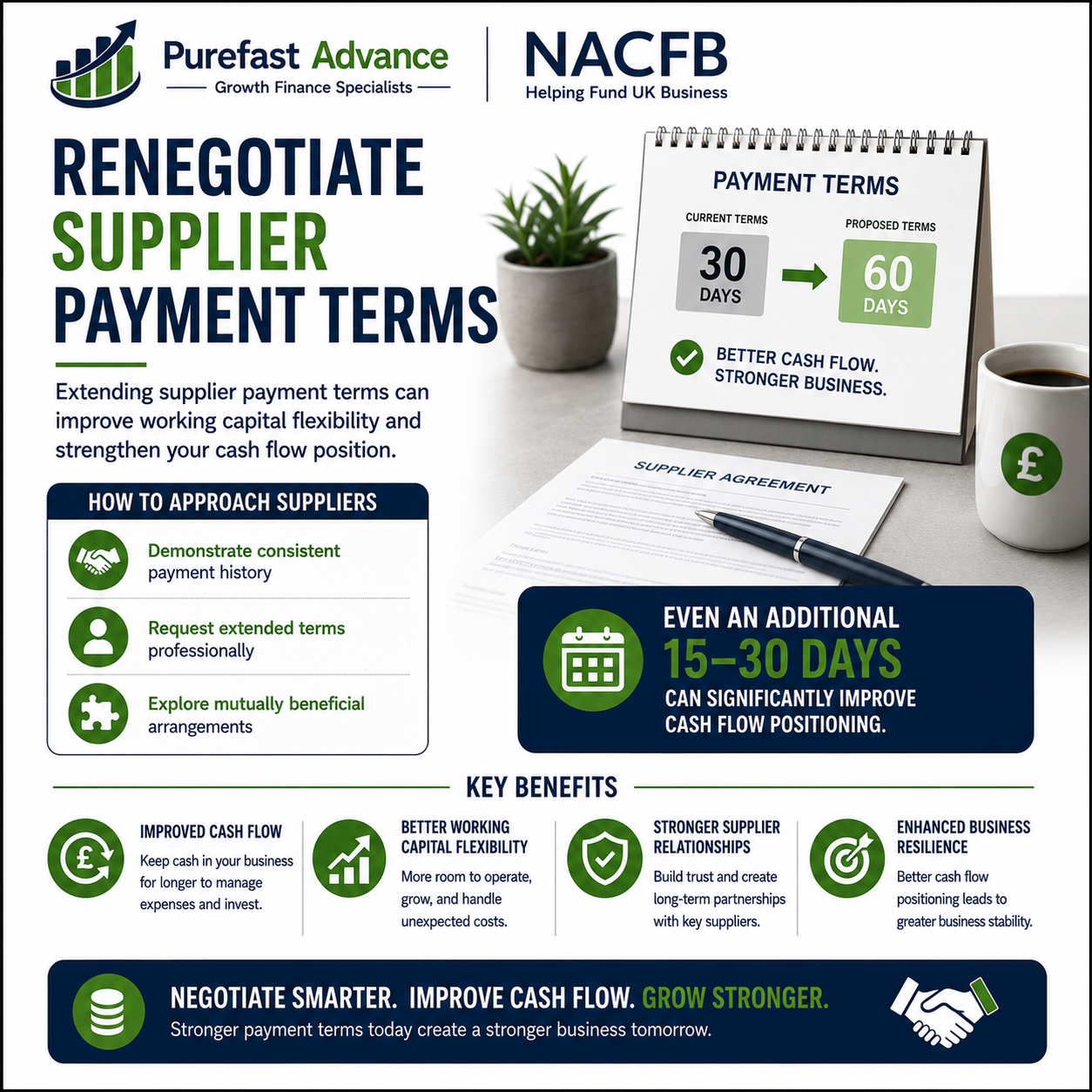
3. Renegotiate Supplier Payment Terms
Extending supplier payment terms can improve working capital flexibility.
Approach suppliers by:
Demonstrating consistent payment history
Requesting extended terms professionally
Exploring mutually beneficial arrangements
Even an additional 15–30 days can significantly improve cash flow positioning.
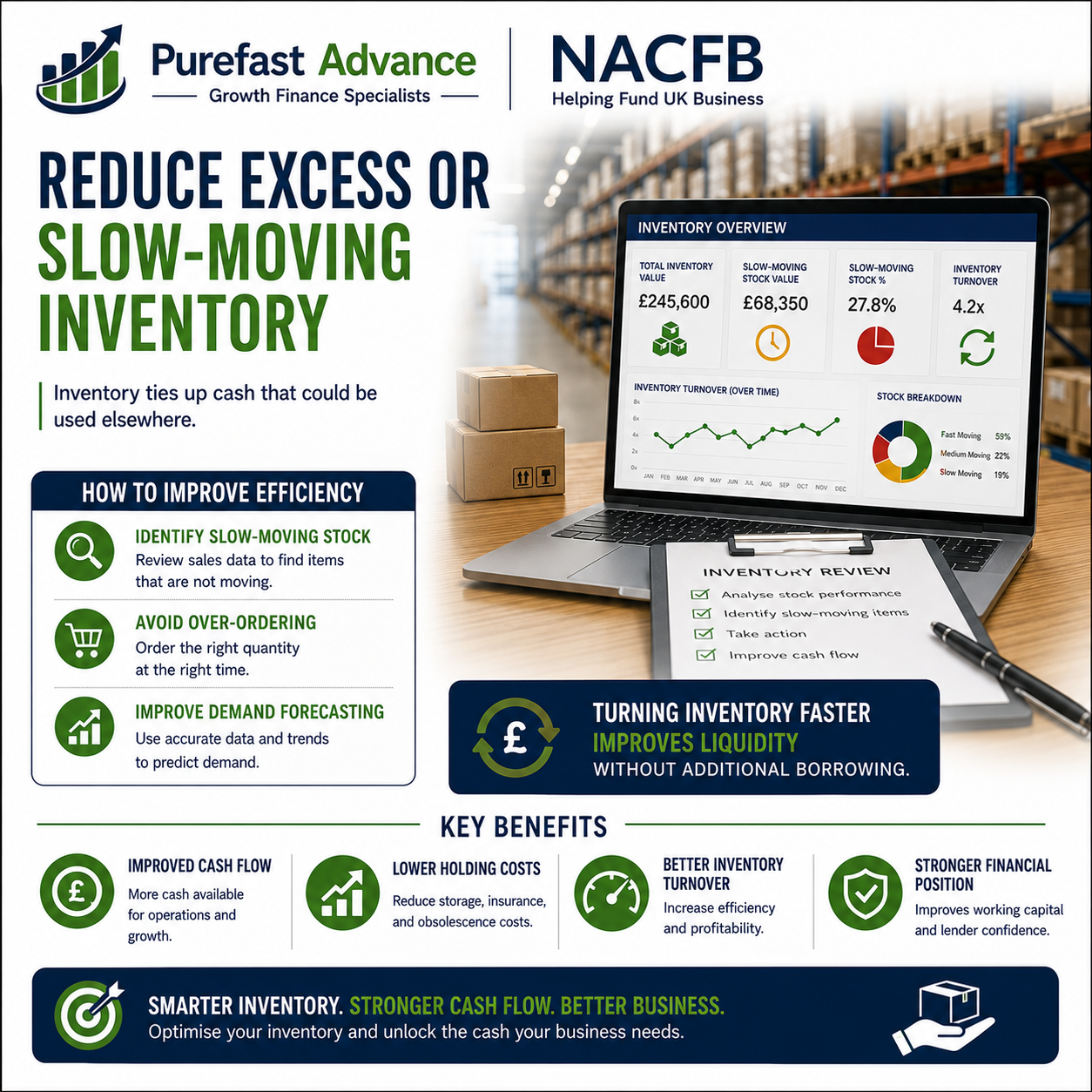
4. Reduce Excess or Slow-Moving Inventory
Inventory ties up cash that could be used elsewhere.
To improve efficiency:
Identify slow-moving stock
Avoid over-ordering
Improve demand forecasting
Turning inventory faster improves liquidity without additional borrowing.
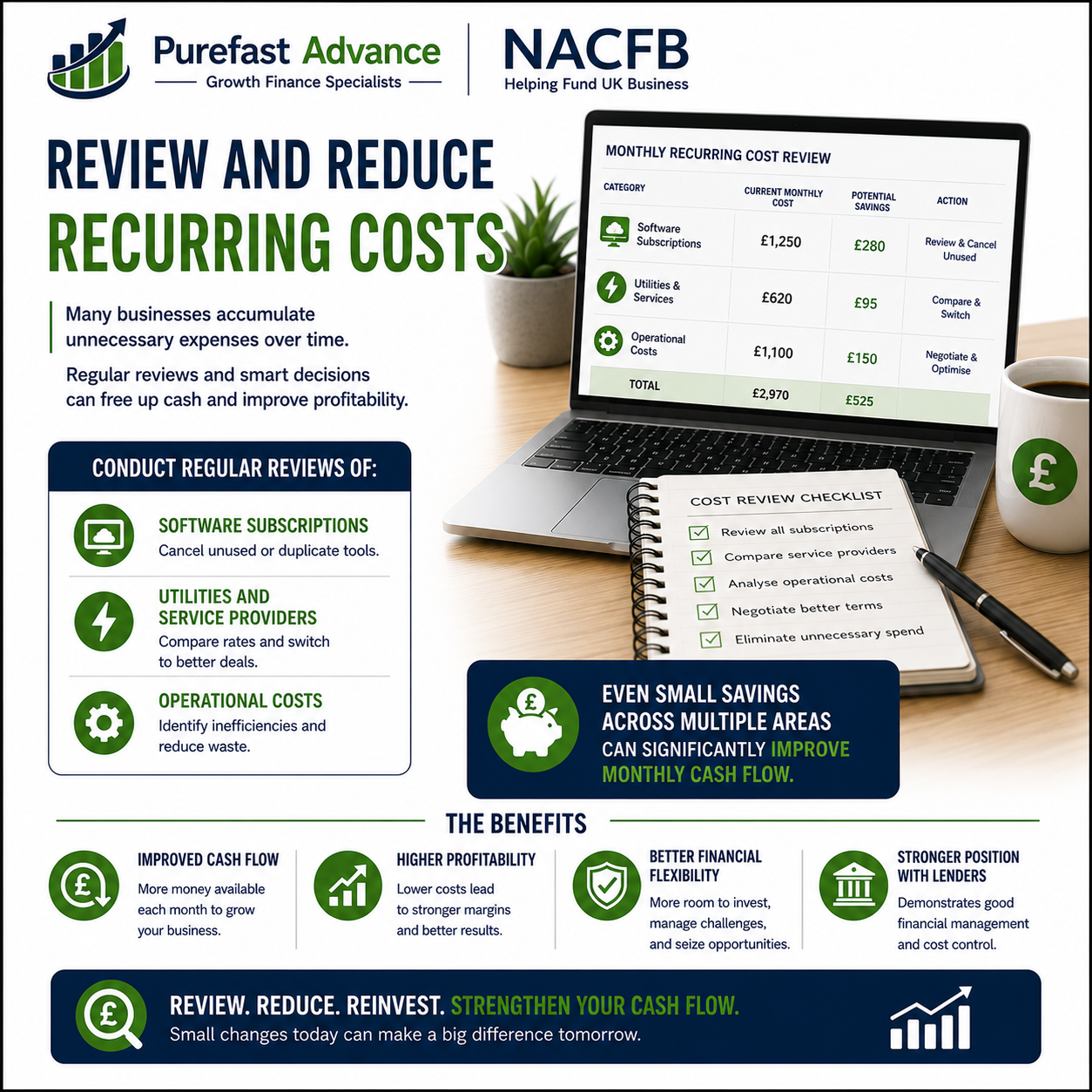
5. Review and Reduce Recurring Costs
Many businesses accumulate unnecessary expenses over time.
Conduct regular reviews of:
Software subscriptions
Utilities and service providers
Operational costs
Even small savings across multiple areas can significantly improve monthly cash flow.
Real Business Example
An SME with £400,000 annual turnover improved cash flow by over £30,000 annually by:
Reducing debtor days
Cancelling unused software
Negotiating supplier terms
No external borrowing was required.
When Borrowing May Still Be Necessary
While internal improvements are powerful, some situations still require funding:
Rapid expansion
Large contract fulfilment
Seasonal cash flow gaps
In these cases, external finance can complement strong internal cash flow management.
Improving cash flow without borrowing is entirely possible with the right systems in place.
By focusing on invoicing, collections, supplier terms, inventory, and costs, businesses can significantly improve financial stability.
If you want to explore both internal cash flow strategies and funding options to support growth, our team can help assess the best approach for your business.
