
Can You Save 15% Across the Board? How Cost Reduction Can Improve Cash Flow and Funding Opportunities
For many UK SMEs, the focus is often on increasing revenue to improve profitability and cash flow. However, one of the most effective — and often overlooked — ways to strengthen your business is through cost reduction and efficiency improvements.
Even a modest 15% reduction in operating costs can significantly improve:
Cash flow stability
Profit margins
Business valuation
Access to SME finance UK
Eligibility for business loans UK and working capital finance
Lenders don’t just look at revenue — they look at how efficiently your business operates.
A business that controls costs effectively is seen as lower risk and more financially stable, which improves funding outcomes.
In this guide, we explore how SMEs in the UK can realistically achieve cost savings and how this directly improves both cash flow and funding opportunities.
Why Cost Reduction Matters for UK SMEs
Cost management is one of the most powerful drivers of business performance.
In the UK SME finance market, lenders assess:
Profit margins
Cash flow consistency
Operating efficiency
Debt service capability
Even if revenue is strong, high unnecessary costs can reduce your ability to secure business funding UK solutions.
Reducing costs by 10–15% can:
Increase available working capital
Improve loan affordability
Strengthen creditworthiness
Reduce reliance on overdrafts or short-term borrowing
Can You Really Save 15% Across the Board?
For most SMEs, achieving a full 15% reduction in every cost category is unlikely.
However, across multiple areas combined, it is often achievable through:
Supplier renegotiation
Operational efficiency improvements
Subscription and service reviews
Waste reduction
Process automation
The key is not cutting blindly — it is optimising strategically
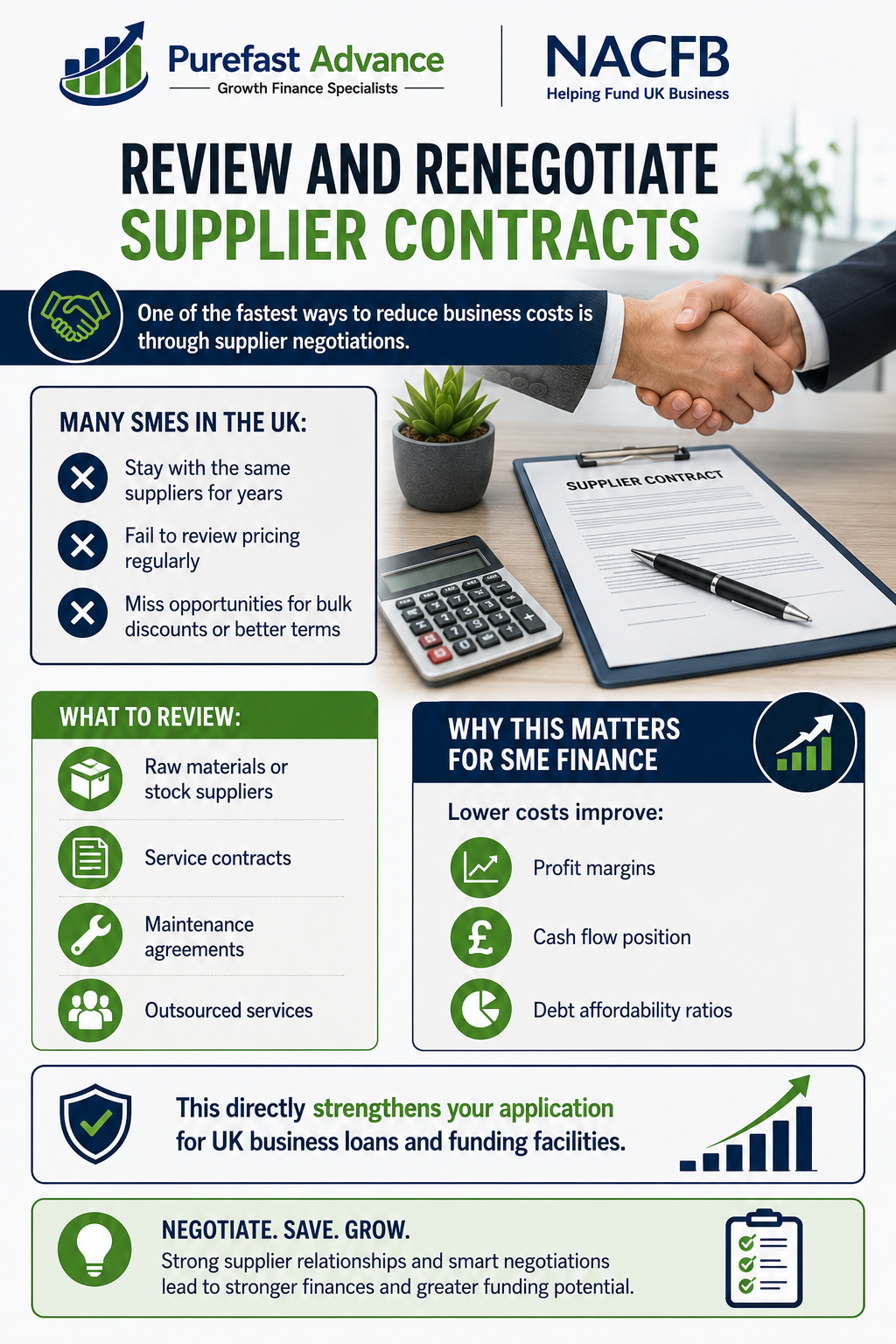
1. Review and Renegotiate Supplier Contracts
One of the fastest ways to reduce business costs is through supplier negotiations.
Many SMEs in the UK:
Stay with the same suppliers for years
Fail to review pricing regularly
Miss opportunities for bulk discounts or better terms
What to review:
Raw materials or stock suppliers
Service contracts
Maintenance agreements
Outsourced services
Why this matters for SME finance
Lower costs improve:
Profit margins
Cash flow position
Debt affordability ratios
This directly strengthens your application for UK business loans and funding facilities.
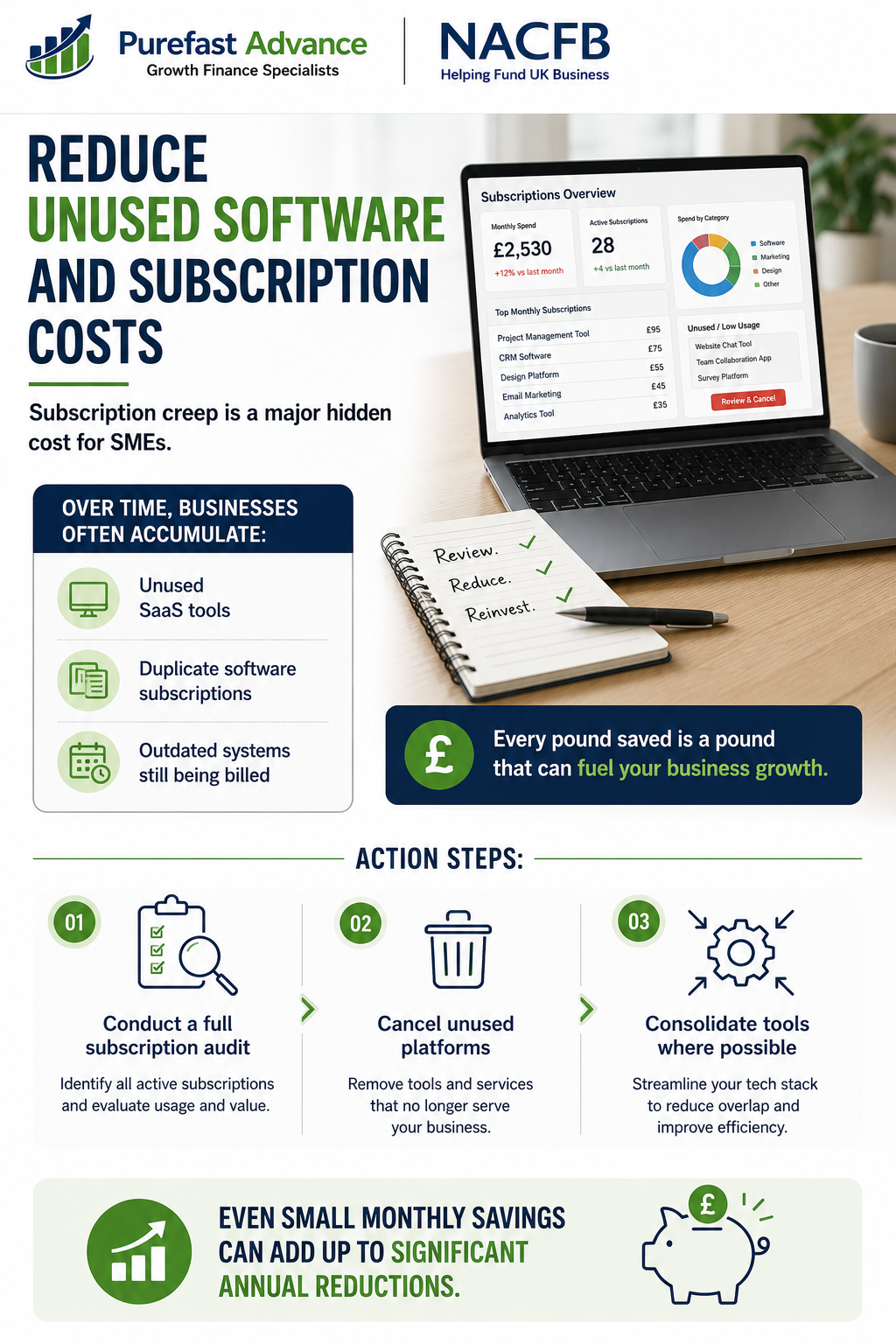
2. Reduce Unused Software and Subscription Costs
Subscription creep is a major hidden cost for SMEs. Over time, businesses often accumulate: Unused SaaS tools Duplicate software subscriptions Outdated systems still being billed Action steps: Conduct a full subscription audit Cancel unused platforms Consolidate tools where possible Even small monthly savings can add up to significant annual reductions. have it designed for a wesbite blog
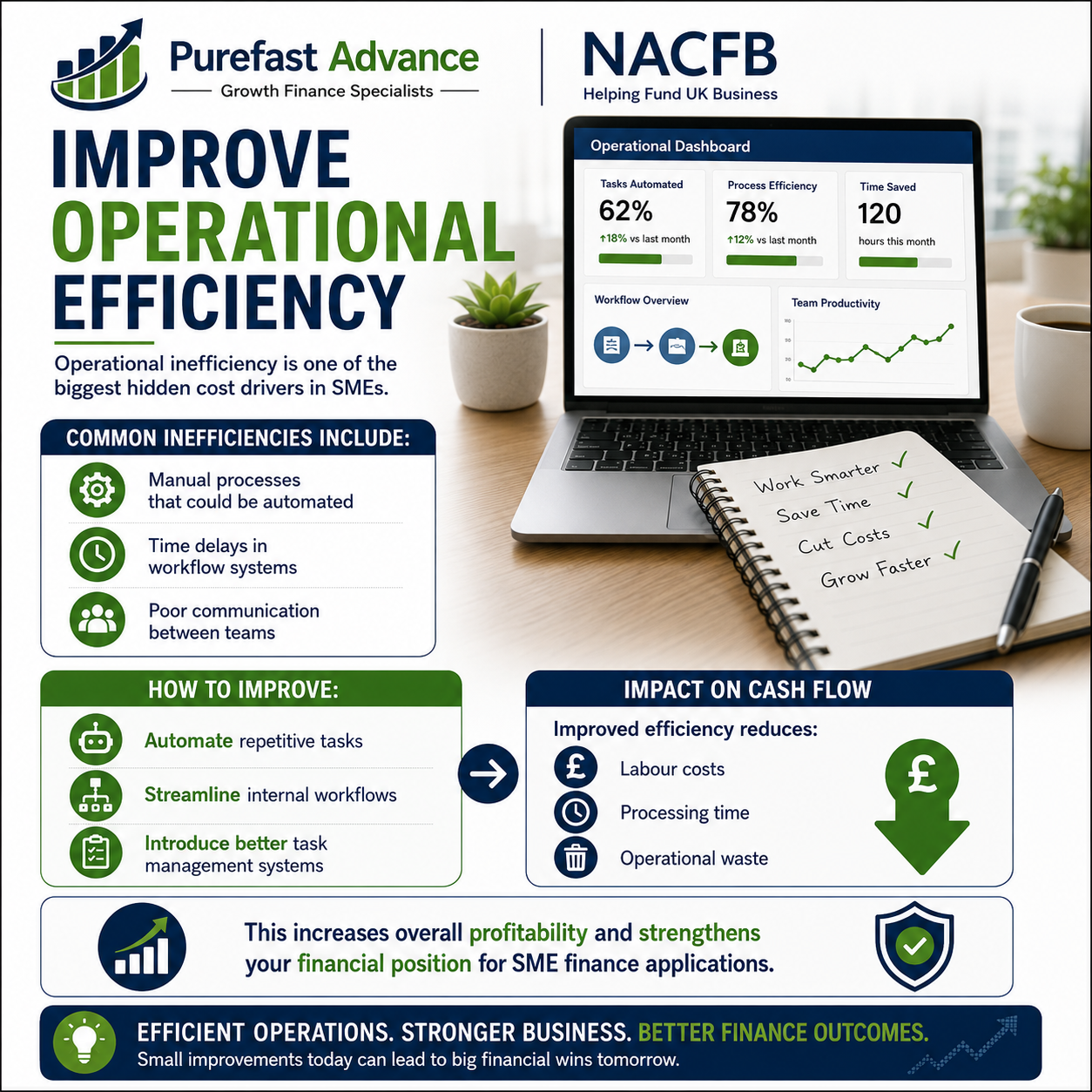
3. Improve Operational Efficiency
Operational inefficiency is one of the biggest hidden cost drivers in SMEs.
Common inefficiencies include:
Manual processes that could be automated
Time delays in workflow systems
Poor communication between teams
How to improve:
Automate repetitive tasks
Streamline internal workflows
Introduce better task management systems
Impact on cash flow
Improved efficiency reduces:
Labour costs
Processing time
Operational waste
This increases overall profitability and strengthens your financial position for SME finance applications.
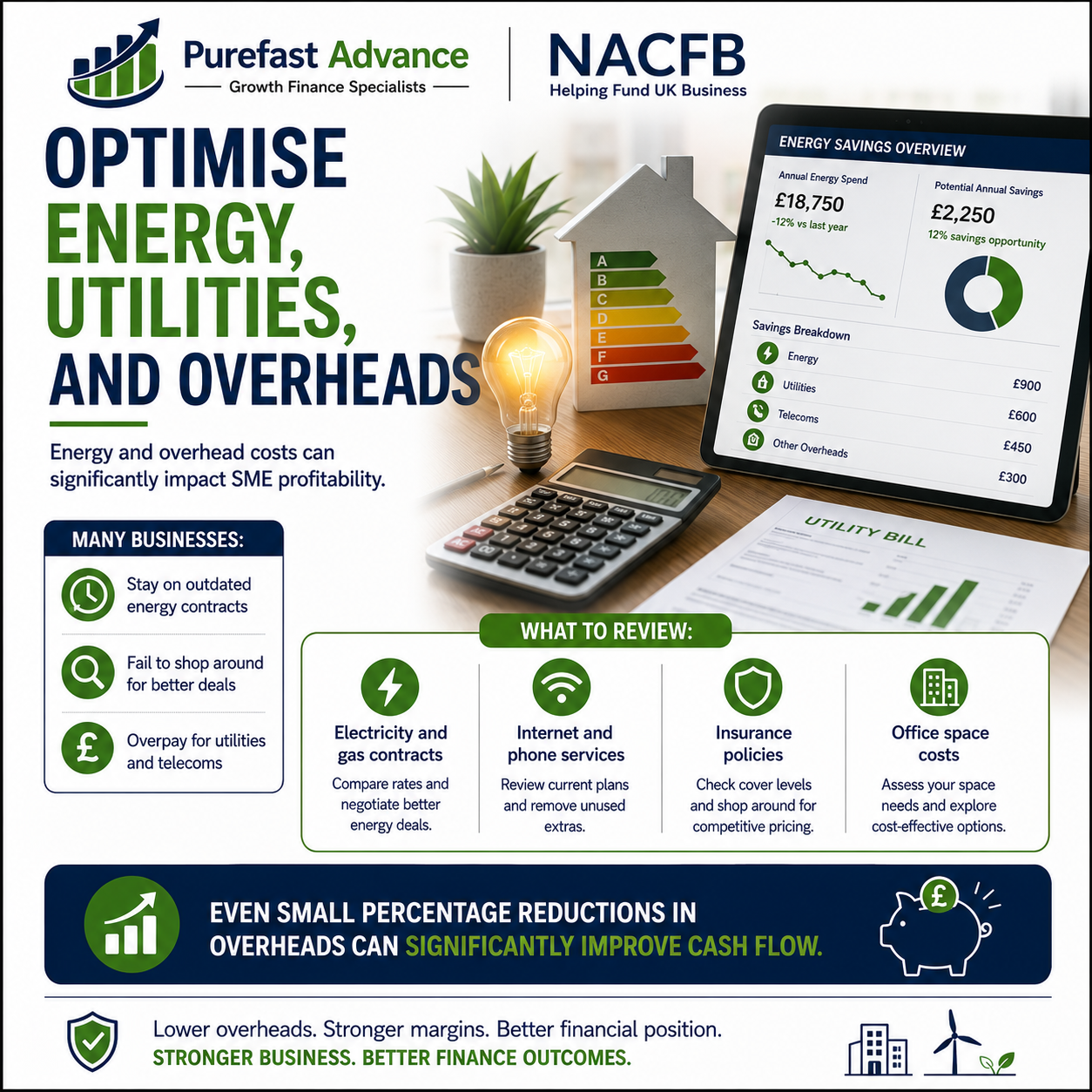
4. Optimise Energy, Utilities, and Overheads
Energy and overhead costs can significantly impact SME profitability. Many businesses: Stay on outdated energy contracts Fail to shop around for better deals Overpay for utilities and telecoms What to review: Electricity and gas contracts Internet and phone services Insurance policies Office space costs Even small percentage reductions in overheads can significantly improve cash flow.
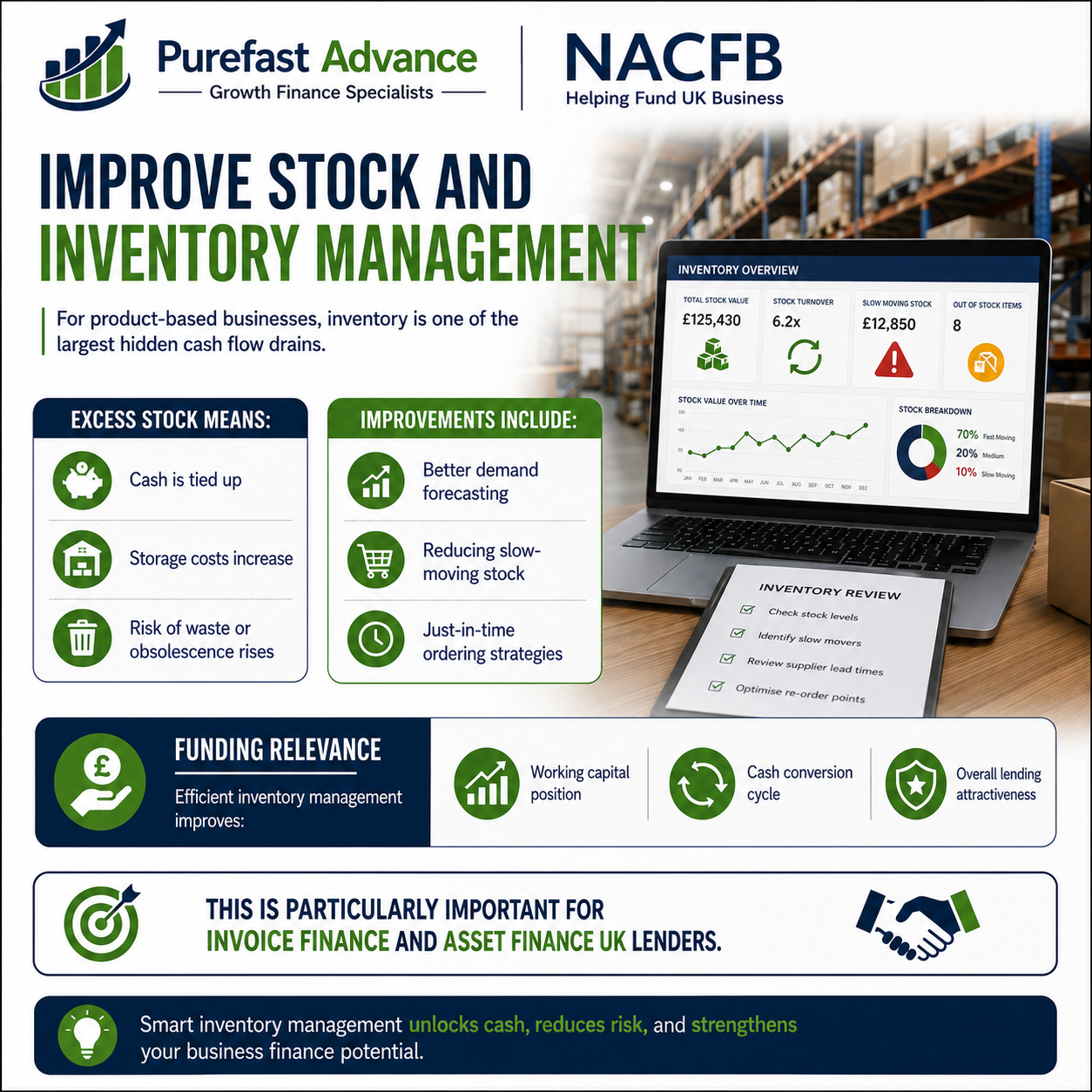
5. Improve Stock and Inventory Management
For product-based businesses, inventory is one of the largest hidden cash flow drains.
Excess stock means:
Cash is tied up
Storage costs increase
Risk of waste or obsolescence rises
Improvements include:
Better demand forecasting
Reducing slow-moving stock
Just-in-time ordering strategies
Improvements include: Funding relevance
Efficient inventory management improves:
Working capital position
Cash conversion cycle
Overall lending attractiveness
Better demand forecasting
Reducing slow-moving stock
Just-in-time ordering strategies
This is particularly important for invoice finance and asset finance UK lenders.
How Cost Reduction Improves Access to SME Finance
Lenders in the UK assess more than just revenue.
They focus heavily on:
Profitability
Cash flow strength
Business efficiency
Debt repayment ability
When you reduce costs:
Cash flow improves
Profit margins increase
Risk profile decreases
This makes your business more attractive for:
Business loans UK
Invoice finance UK
Asset finance
Working capital funding
Real UK SME Example
A UK-based service business with £500,000 annual turnover implemented cost-saving measures across operations.
Within 6 months:
Subscription costs reduced by 18%
Supplier renegotiation saved 12%
Operational efficiency improved productivity by 20%
Overall impact:
£45,000+ annual savings
Stronger cash flow position
Improved eligibility for SME finance
The business later secured funding on better terms due to improved financial performance.
When Cost Reduction Is Not Enough
While cost optimisation is powerful, some situations still require external funding:
Rapid business growth
Large contract fulfilment
Seasonal demand spikes
Expansion opportunities
In these cases, combining cost efficiency with SME funding solutions creates the strongest financial position.
Achieving a 15% cost reduction across your business may not happen overnight, but strategic improvements across multiple areas can significantly strengthen your financial performance.
For UK SMEs, cost efficiency is not just about saving money — it directly impacts:
Cash flow strength
Profitability
Funding eligibility
Access to better business finance options
A leaner, more efficient business is always more attractive to lenders.
If you're reviewing your business costs and want to understand how improved cash flow can strengthen your access to UK SME finance and business funding options, our team can help assess your position and guide you toward the right funding strategy.
