
5 Ways to Improve Your Business Credit Score
Your business credit score plays a crucial role in determining how lenders view your company.
It affects:
Loan approvals
Interest rates
Credit limits
Supplier terms
A strong credit profile signals stability, reliability, and financial discipline.
The good news is that business credit scores can be improved with consistent actions over time.
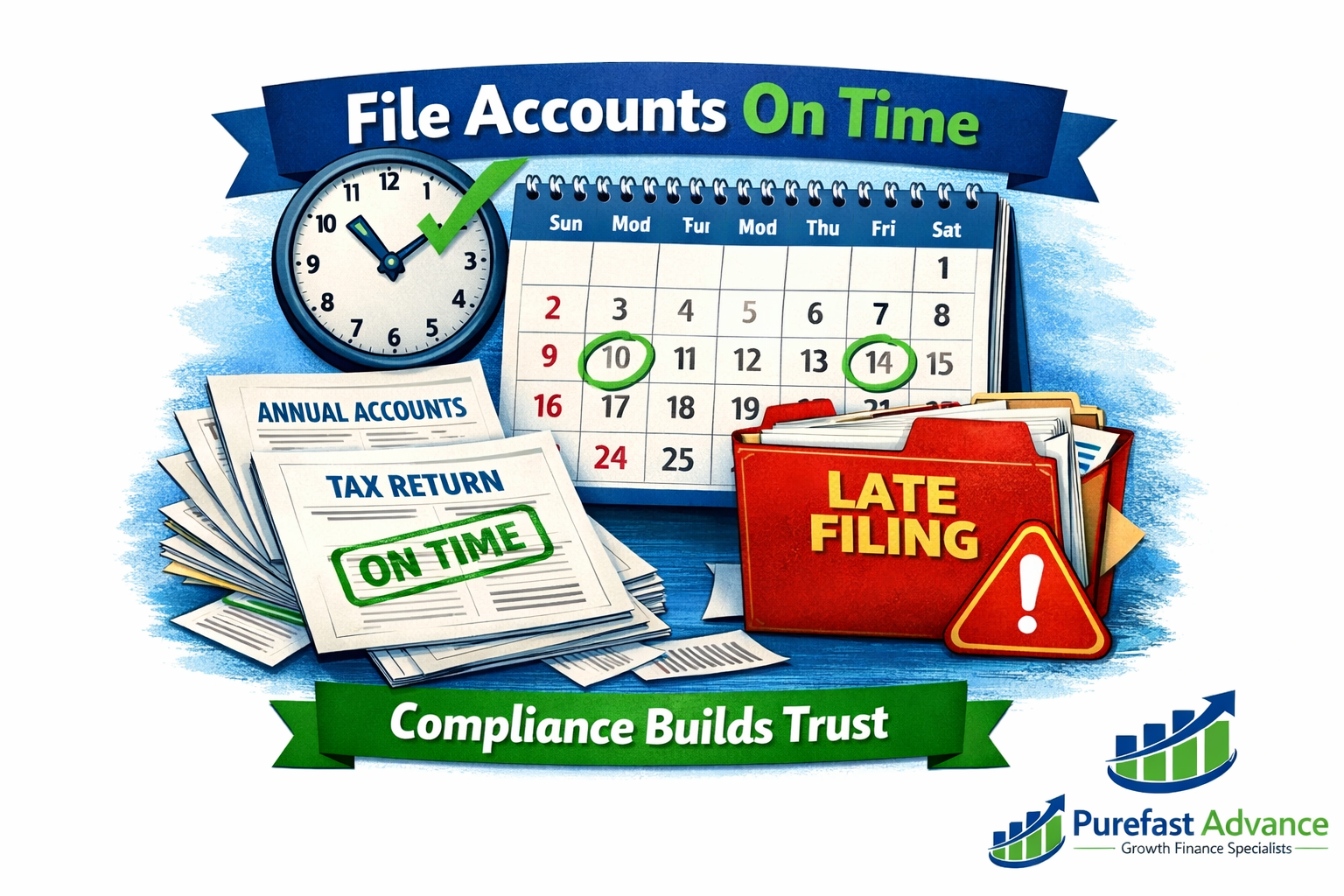
1. File Accounts and Returns on Time
One of the most important factors in your credit profile is compliance.
Late filings can negatively affect how credit agencies and lenders assess your business.
To maintain a strong score:
Submit annual accounts before deadlines
File corporation tax returns on time
Keep confirmation statements updated
Consistency builds trust.
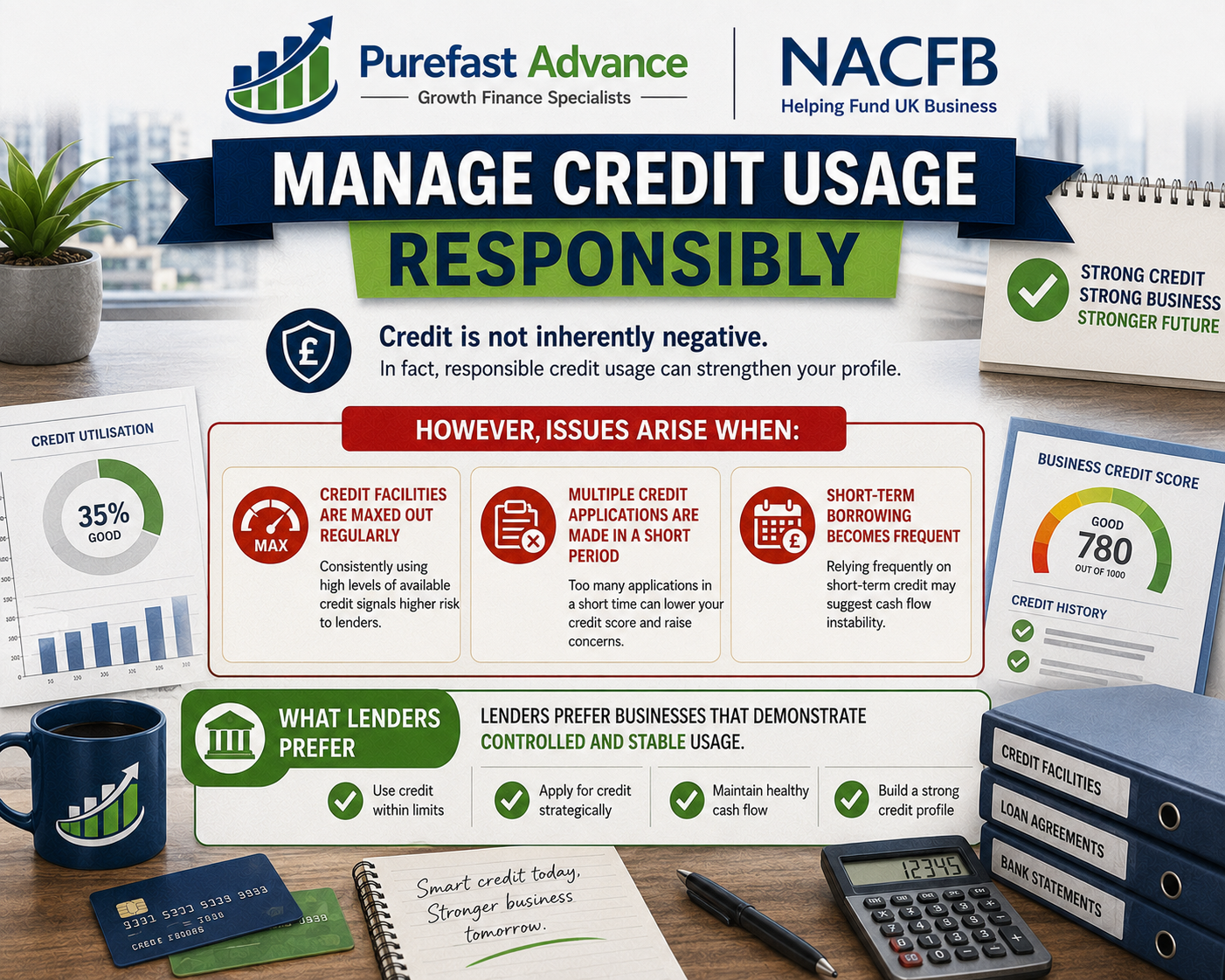
2. Manage Credit Usage Responsibly
Credit is not inherently negative. In fact, responsible credit usage can strengthen your profile.
However, issues arise when:
Credit facilities are maxed out regularly
Multiple credit applications are made in a short period
Short-term borrowing becomes frequent
Lenders prefer businesses that demonstrate controlled and stable usage.
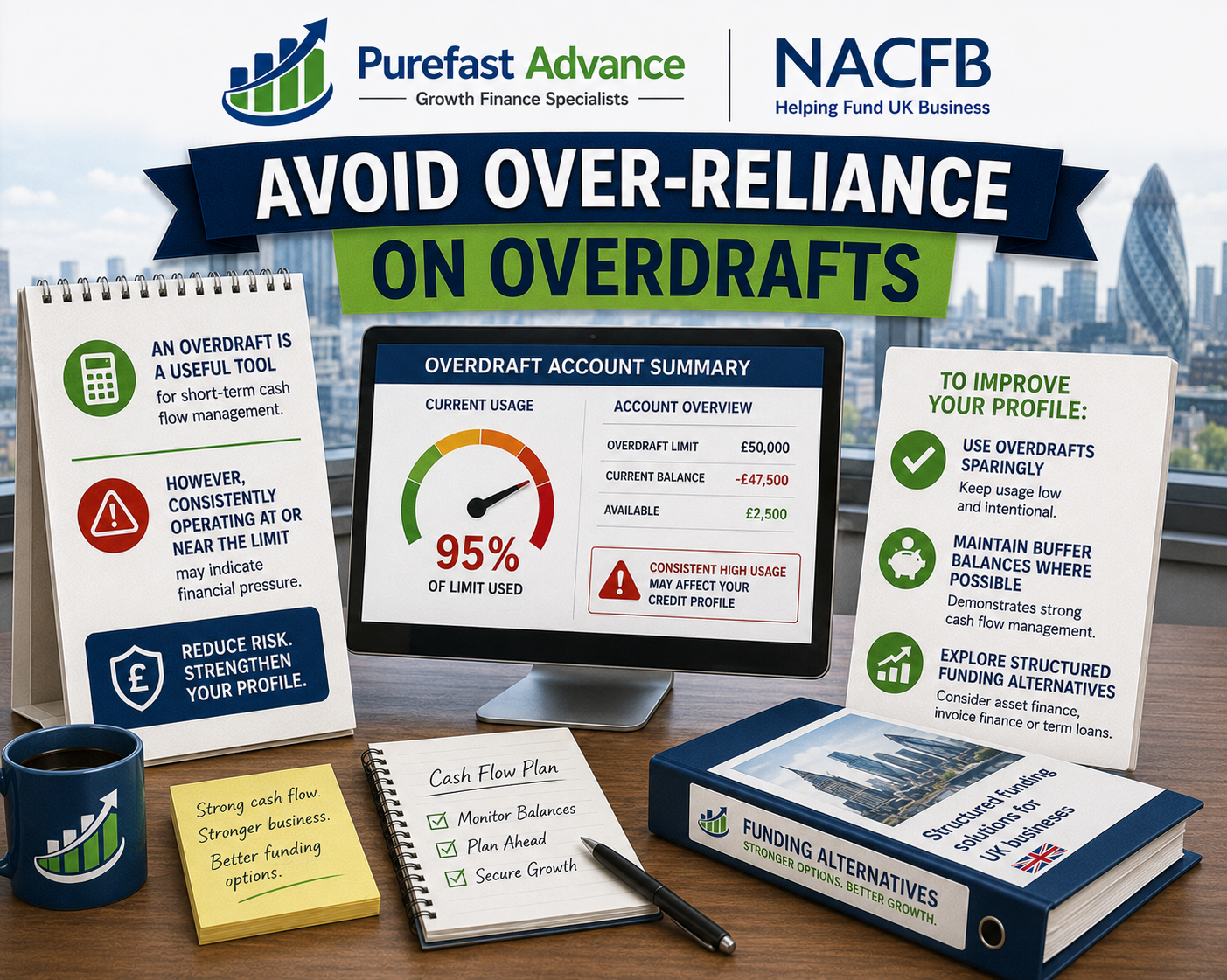
3. Avoid Over-Reliance on Overdrafts
An overdraft is a useful tool for short-term cash flow management.
However, consistently operating at or near the limit may indicate financial pressure.
To improve your profile:
Use overdrafts sparingly
Maintain buffer balances where possible
Explore structured funding alternatives
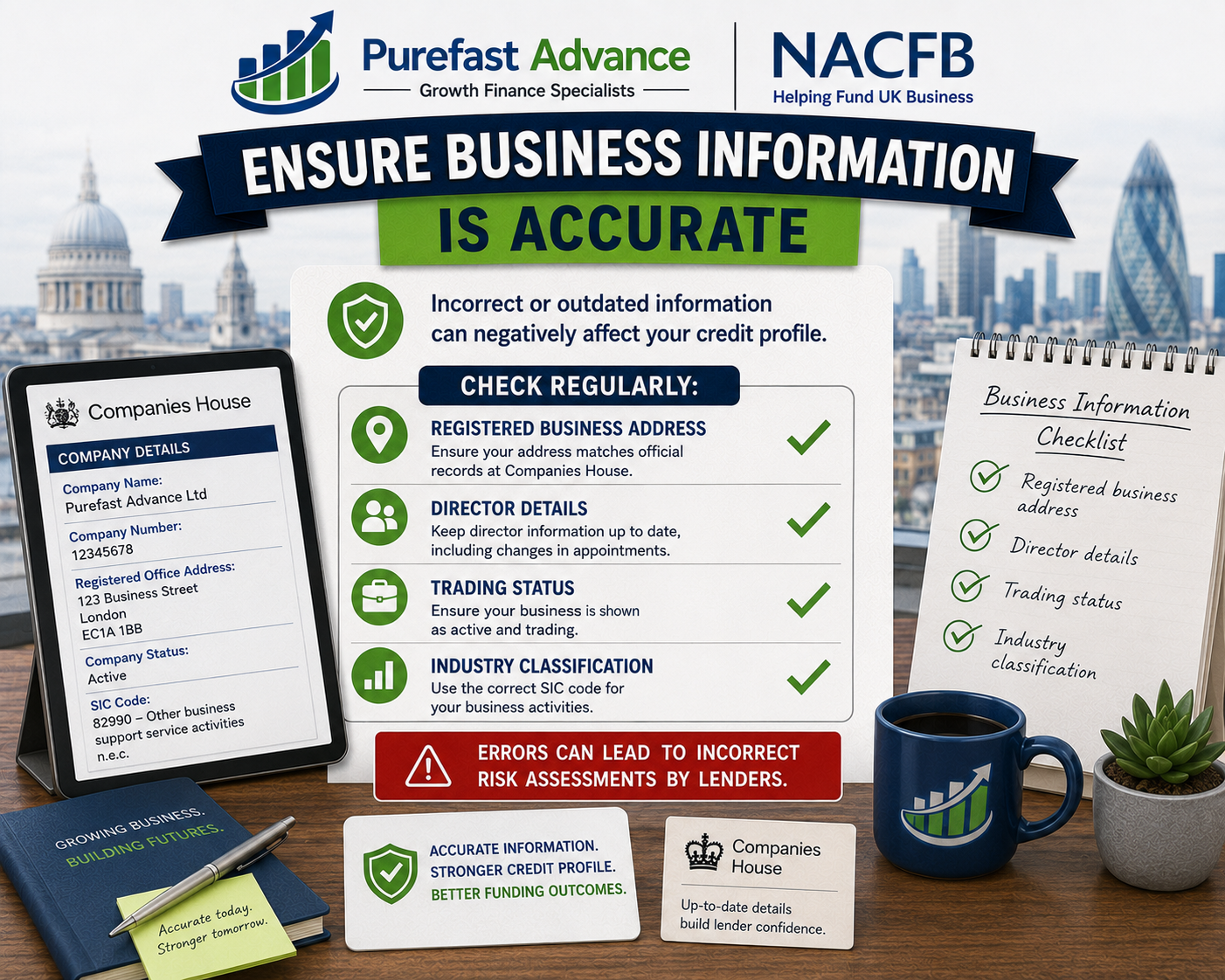
4. Ensure Business Information Is Accurate
Incorrect or outdated information can negatively affect your credit profile.
Check regularly:
Registered business address
Director details
Trading status
Industry classification
Errors can lead to incorrect risk assessments by lenders.
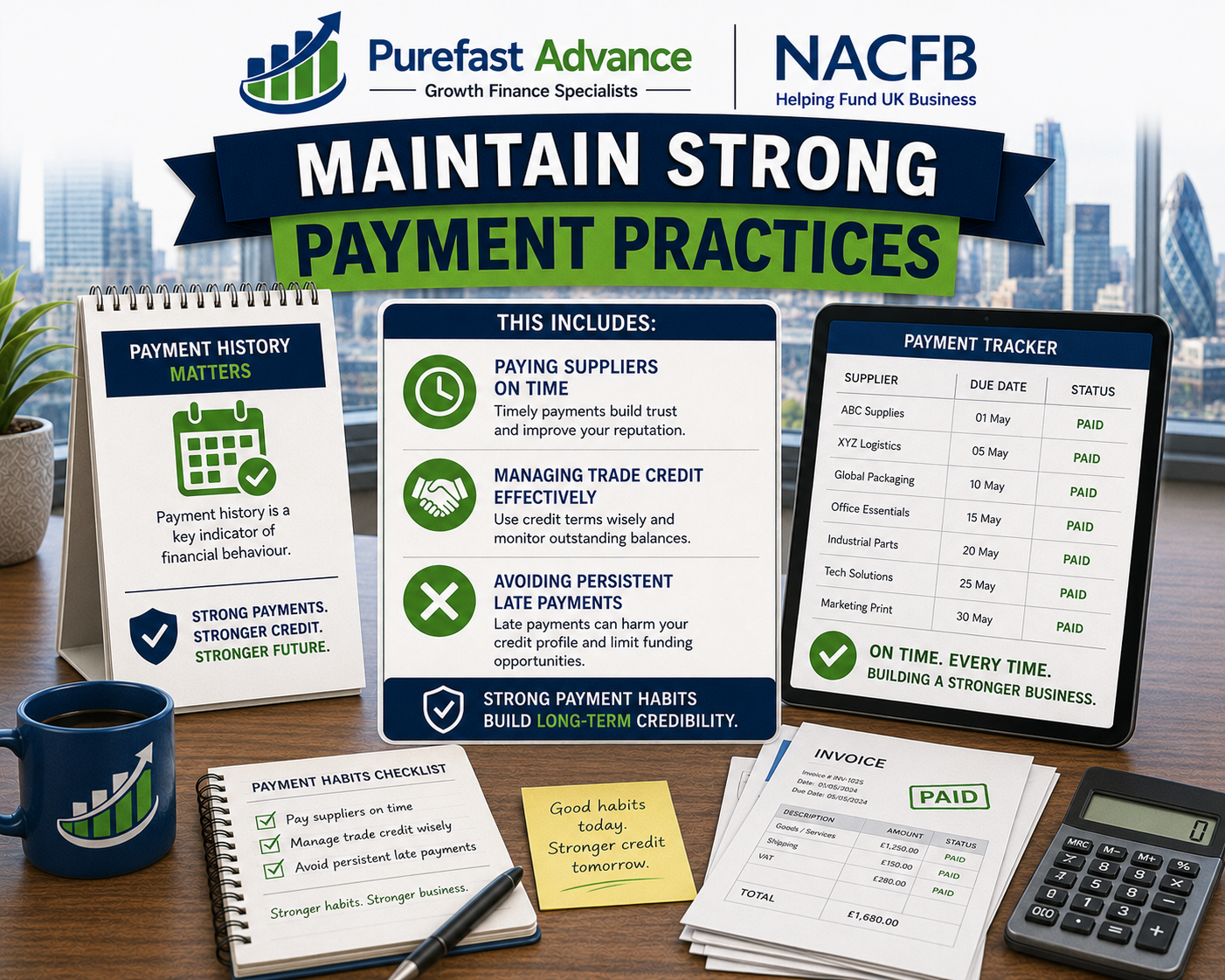
5. Maintain Strong Payment Practices
Payment history is a key indicator of financial behaviour.
This includes:
Paying suppliers on time
Managing trade credit effectively
Avoiding persistent late payments
Strong payment habits build long-term credibility.
Why Business Credit Matters for Funding
Lenders use your credit profile to assess:
Risk level
Repayment reliability
Business stability
A stronger credit score can lead to:
Faster approvals
Lower interest rates
More flexible funding options
Real-World Example
Two businesses apply for the same funding facility.
Business A has strong credit discipline, timely filings, and low credit utilization.
Business B has inconsistent filings and high overdraft usage.
Even with similar revenue, Business A is more likely to secure better terms.
How Long Does It Take to Improve Credit?
Improvement is not immediate.
Most businesses see meaningful changes within:
3 to 6 months for minor improvements
6 to 12 months for significant strengthening
Improving your business credit score is about building financial trust over time.
By maintaining strong compliance, managing credit responsibly, and ensuring accurate records, your business becomes more attractive to lenders.
If you want to understand how your current credit profile impacts your funding options, our team can help assess your eligibility and guide you toward better financing opportunities.
